






Stockyard Management Software for Bulk Commodities.
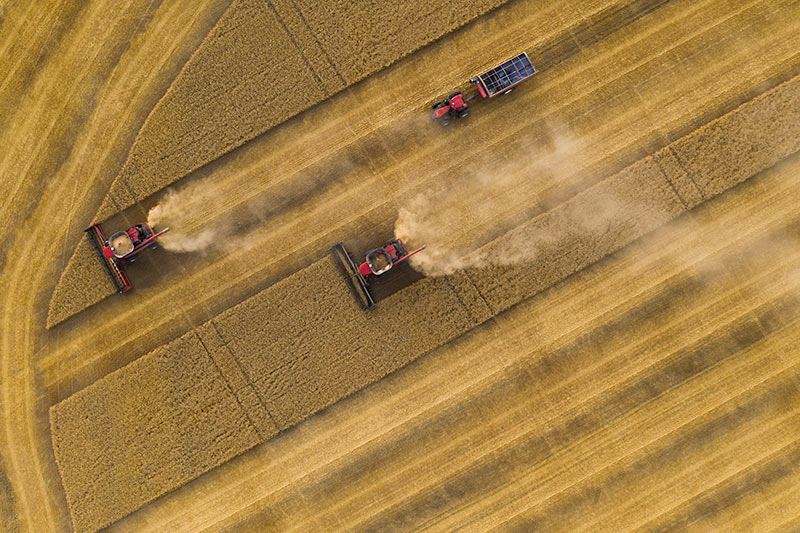
Whether you're managing iron ore at an export terminal or receiving grain at the height of harvest - the gap between what your site plan says and what your site does is where the losses are. Quoreka closes it.
- Smart Scales
Automate weighing operations at truck scales or weighbridges for faster, more accurate receival and dispatch. Quoreka tracks stock from entry to exit and supports self-service delivery—reducing queues, saving time, and improving accuracy.
What is a Stockyard Management System?
A stockyard management system is the software that tells you what is in your yard, where it is, what grade or quality it is, and what your equipment is doing with it - right now, not yesterday. Without one, you're blending on assumptions. Scheduling on guesses. Settling disputes with spreadsheets.
Quoreka connects your physical site to your operational decisions. It handles the complexity - whether that's bulk minerals at a mine or port terminal, or grain moving through a network of silos and receival facilities. Bulk volumes, mobile equipment fleets, grade tolerances, multi-commodity segregation, contract-to-site traceability: your teams stop chasing information and start using it.
The Quoreka Stockyard Management System includes process management, task execution, business intelligence, stockpile management, anti-collision systems, and quality management systems tailored for the commodity supply chain.
-
1 Site Automation Control (SAC)
-
2 3D Quality Management (QMS)
-
3 3D Anti Collision
-
4 Collision Avoidance System (CAS)
-
5 3D Stockpile Manager
1
Site Automation Control (SAC)
Dynamic Site Task Control
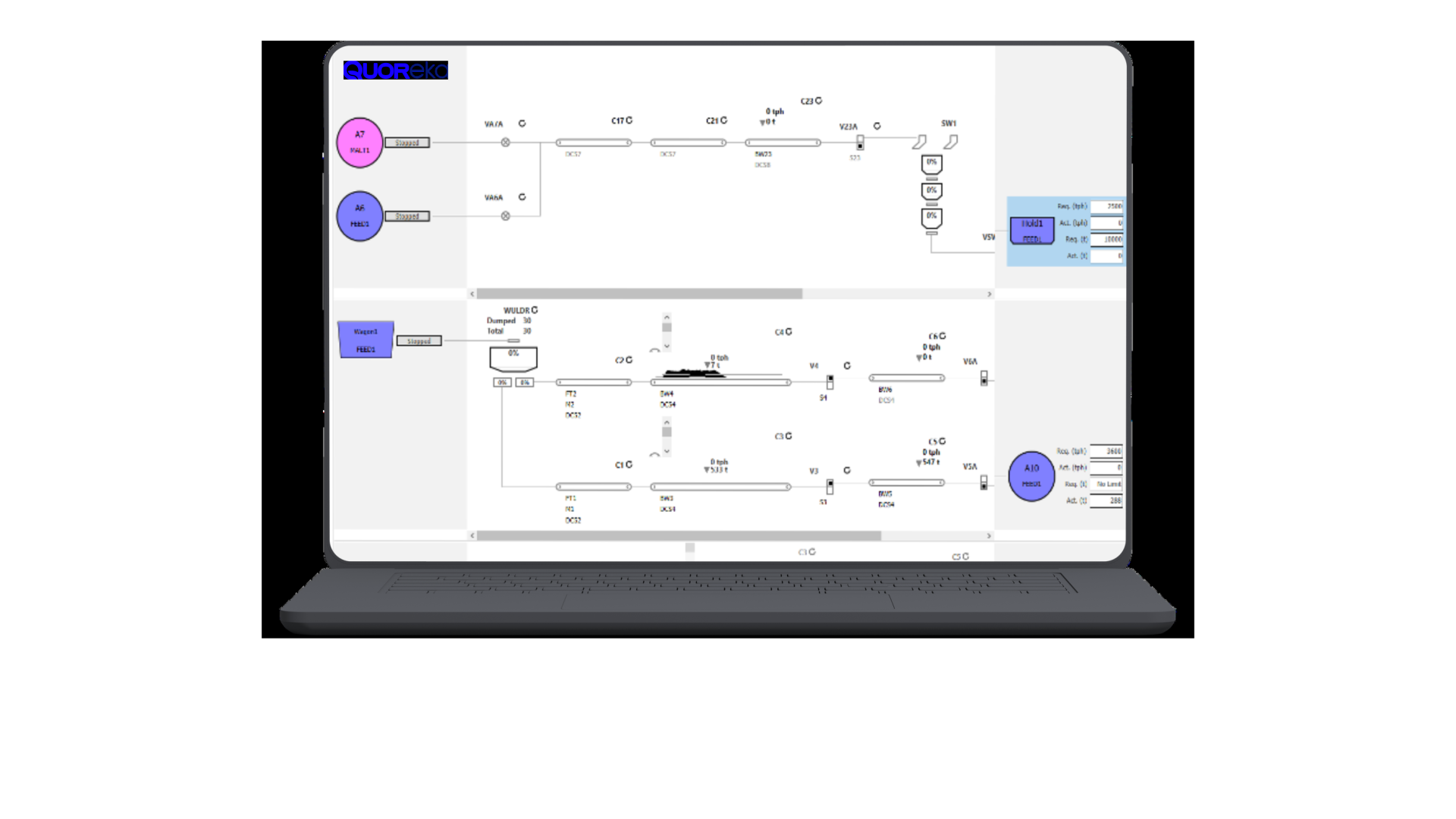
Site Automation Control (SAC) is designed to maximise the performance of bulk handling operations. By automating routine decisions, optimising material routing, and providing real-time visibility of equipment, inventory, and product movement, SAC enables facilities to move more tonnes through existing infrastructure with greater consistency and control.
The result is higher throughput, improved equipment utilisation, reduced operator workload, lower operational risk, and a platform capable of supporting increasingly autonomous operations.

2
3D Quality Management (QMS)
3D Intelligence
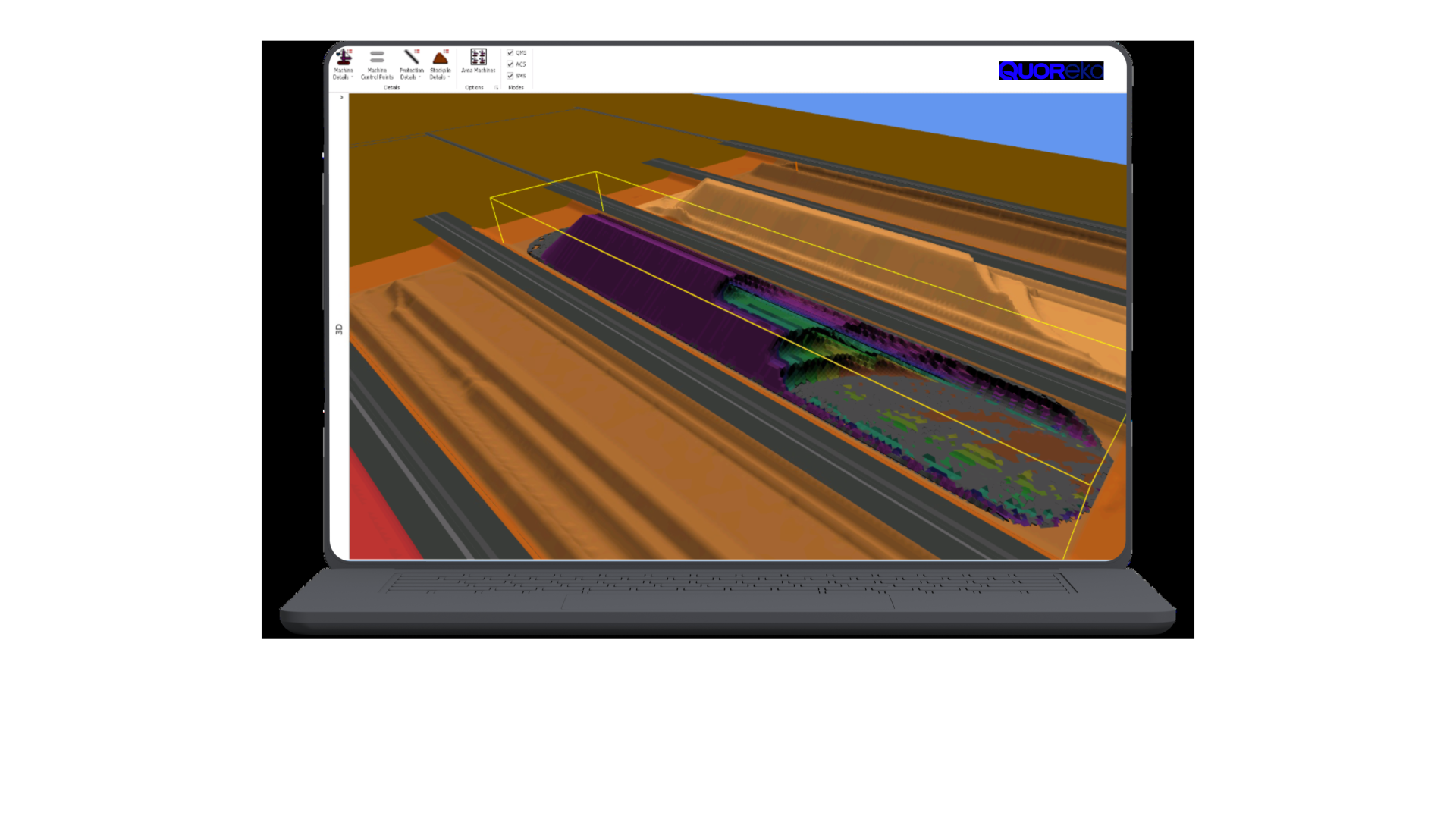
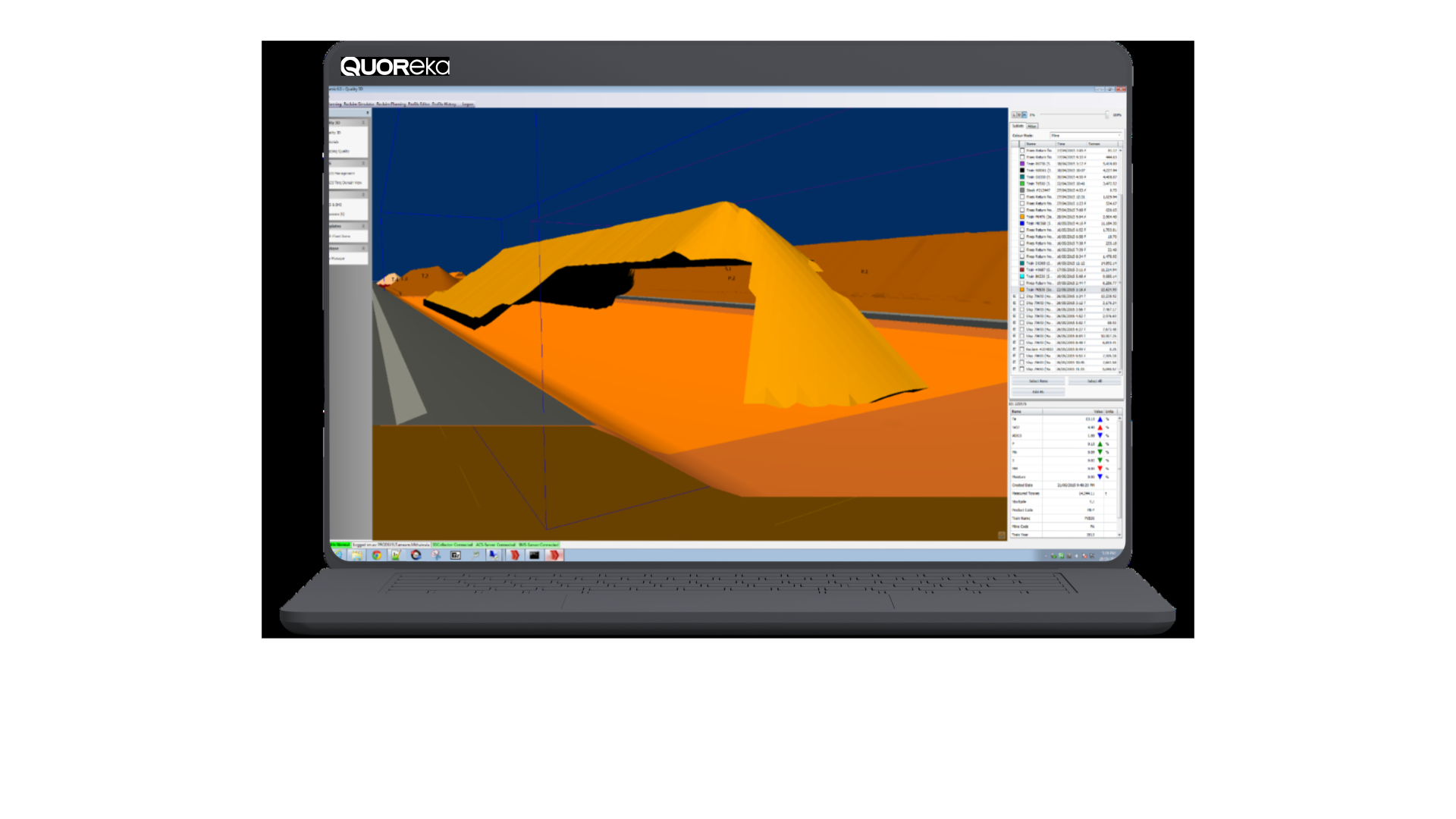
The Quality Management System (QMS) enables operators, planners, and marketers to make quality-driven decisions with confidence. By combining laboratory data, material tracking, and advanced 3D stockpile modelling, QMS provides a detailed understanding of material quality throughout the production and logistics chain.
The system continuously predicts, tracks, and analyses quality outcomes, allowing sites to optimise stacking, reclaiming, blending, and shipment planning before material is moved. The result is greater confidence in contract performance, reduced quality variability, lower risk of penalties, improved utilisation of available inventory, and the ability to maximise product value through informed operational decisions rather than conservative assumptions.
3
3D Anti Collision
Safety First
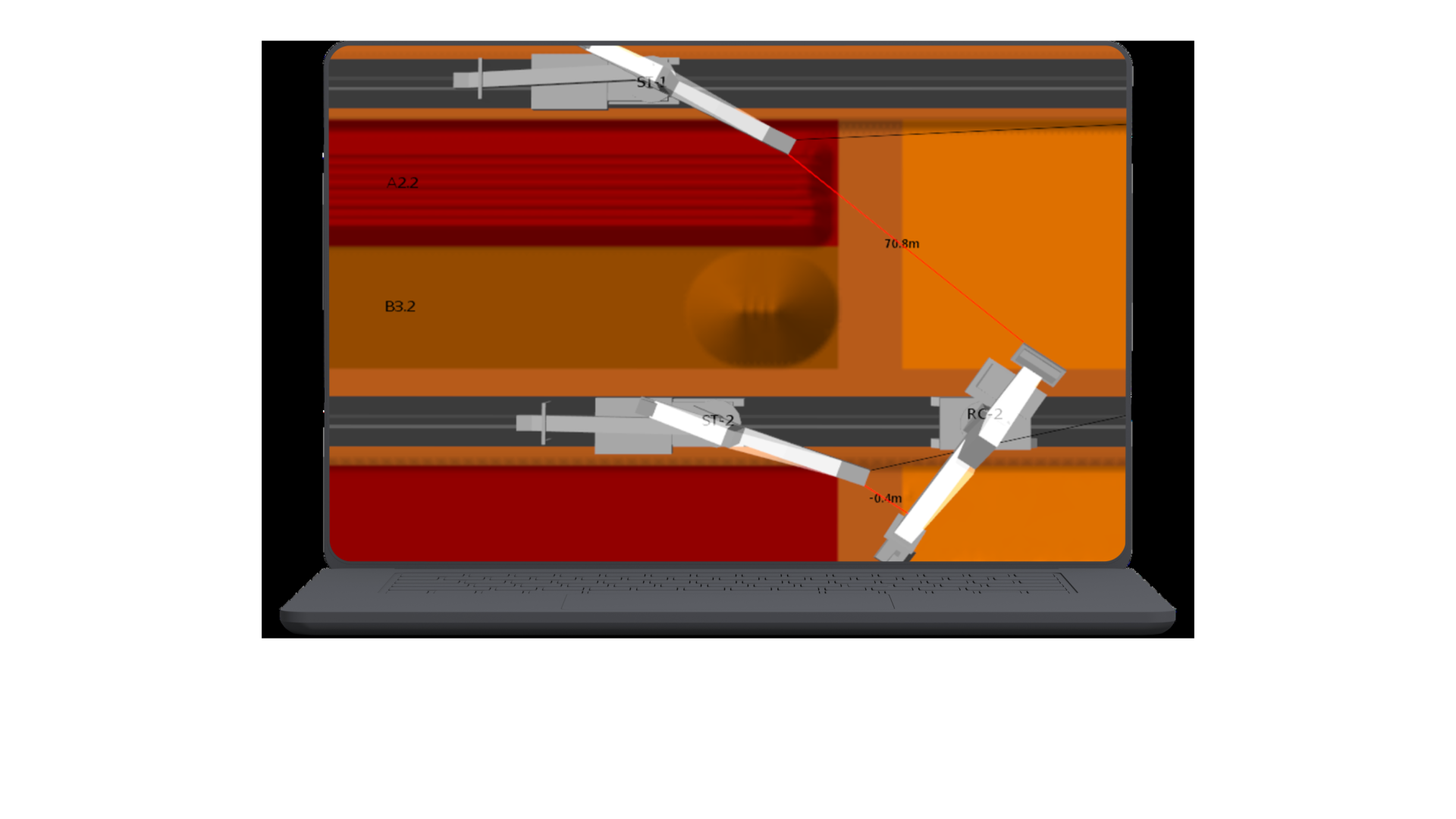
Anti-Collision System (ACS) enables stockyard and bulk handling assets to operate at maximum productivity without compromising safety. Using real-time 3D modelling, predictive collision detection, and automated protection controls, ACS continuously monitors machines, vehicles, vessels, structures, and exclusion zones to prevent hazardous interactions before they occur.
Unlike traditional systems that rely on conservative operating margins, ACS allows equipment to work safely in closer proximity, increasing asset utilisation, reducing unnecessary interruptions, and unlocking additional throughput from existing infrastructure. The result is a safer operation, higher equipment availability, and the confidence to run complex facilities closer to their true operating potential.
4
Collision Avoidance System (CAS)
Proactive Collision Avoidance
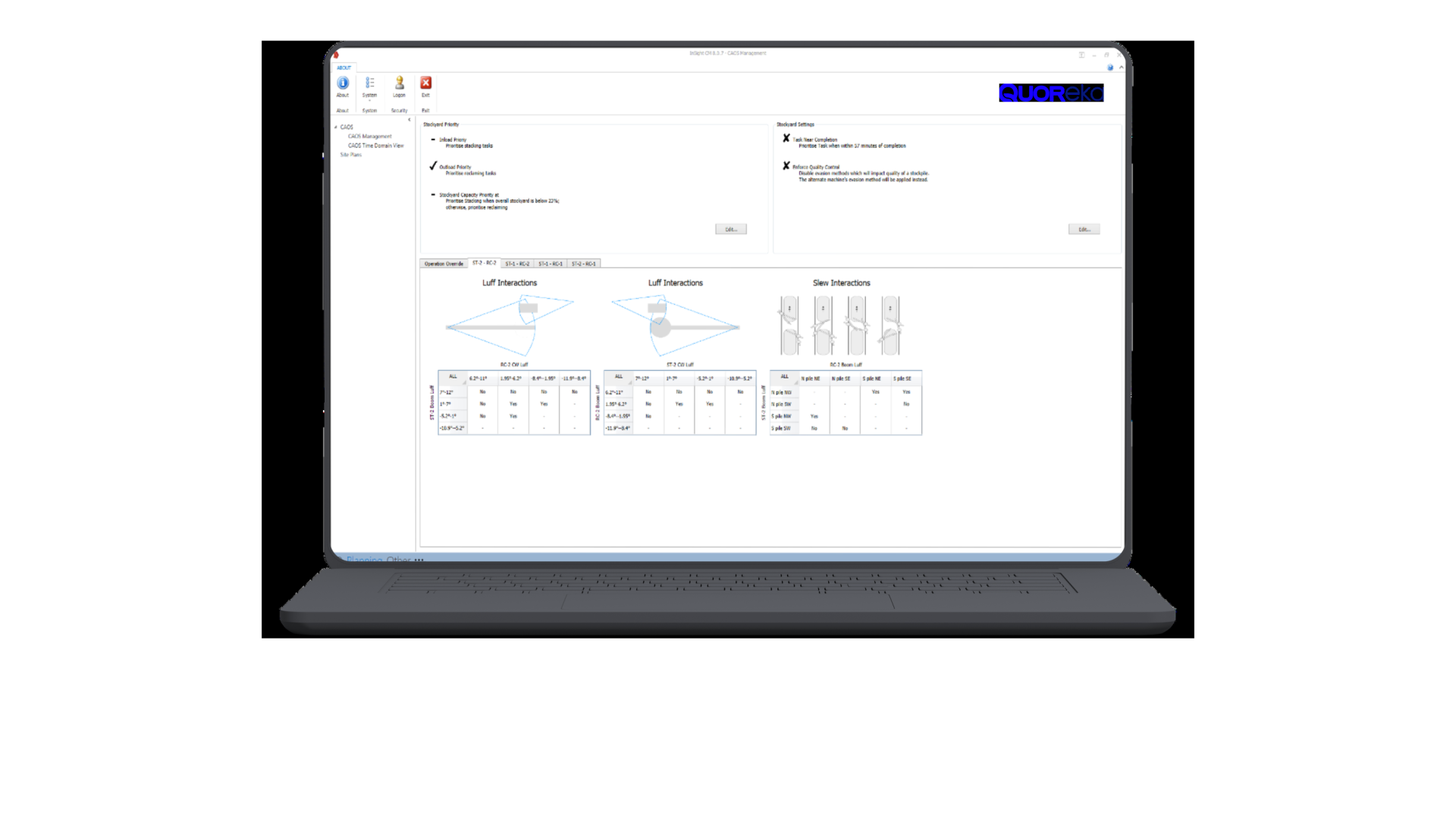
The Collision Avoidance System (CAS) maximises stockyard productivity by predicting and preventing operational conflicts before they impact production. By combining awareness of planned activities, equipment behaviour, machine priorities, and real-time operational conditions, CAS continuously evaluates future interactions and automatically identifies the most effective response.
Unlike traditional protection systems that react to imminent collisions by stopping equipment, CAS acts proactively to avoid unnecessary interruptions, reduce recovery delays, and maintain continuous operation. The result is higher equipment utilisation, fewer production constraints, improved execution of stockyard plans, and the ability to safely extract maximum throughput from complex multi-machine operations.
5
3D Stockpile Manager
Autonomous Stockpile Management
The 3D Stockpile Management System (SMS) transforms stockyards from manually operated storage areas into fully autonomous production assets. Using an accurate real-time 3D model of every stockpile, SMS continuously optimises and controls stacking and reclaiming operations to maximise throughput, increase usable stockyard capacity, and improve equipment utilisation. Advanced algorithms automatically determine how material should be placed and recovered, enabling intelligent capabilities such as autonomous machine control, infill stacking, reclaim optimisation, dynamic operating strategies, and inventory-driven execution.
The result is more tonnes moved through existing infrastructure, higher reclaim rates, improved inventory accuracy, reduced operator intervention, and a stockyard that actively contributes to production performance rather than constraining it.
Proven Value
Tested. Trusted. Built for scale.
Greater stockyard capacity through accurate deposition and dwell control and advanced infill techniques
Accuracy of prediction of shipped grade from stockpile model (Fe at 95% CI)
Reduction in operator time when coupled with SAC
Built for the Full Bulk Supply Chain
Quoreka is used across mine sites, grain receival networks, export terminals, domestic ports, and transfer facilities. The platform is configured to the commodity and the operation - not the other way around.
-
Mining stockyards
ROM pad management, product blending, train load-out
-
Agriculture & Grain Handling
Silo receival, weighbridge management, quality enforcement (moisture, protein), contract-to-silo traceability, harvest scheduling
-
Export terminals
Vessel programming, multi-product segregation, ship loader coordination
-
Domestic ports
Import receival, storage rotation, truck and rail dispatch
-
Transfer and processing facilities
Grade management, intermediate stockpile control, quality reconciliation
Running Grain Operations? Here's What Quoreka Connects.
Most stockyard platforms were built for minerals. Grain operations run differently - harvest windows, moisture specs, multi-grade silo management, and the need to trace every truck back to a specific contract. Quoreka's Commodity Site Manager (CSM) handles this natively.
Live silo levels, intake totals and batch positions updated at the weighbridge, no end-of-day reconciliation.
Results compared against spec in real time. Auto-rejection triggered instantly when parameters fall outside tolerance.
Every truck linked to its purchase order. Deductions flow directly into CTRM - no manual re-entry.
CTRM delivery forecasts visible at site level. Truck slots managed in-system to reduce queues at peak harvest.
Every inbound, transfer and outbound posted in real time. ERP updated continuously, no periodic audits.
Drill down from any P&L or deduction line to the weighbridge transaction, quality certificate and self-invoice.
Real results with proven impact
Trusted to deliver tangible value
Quoreka's Supply Chain Solutions deliver certainty to 100+ leading global commodity businesses
-
Shrinkage is an information problem.
Continuous 3D volume tracking eliminates the survey gaps that create it.
-
Idle equipment is a scheduling problem
Automated stacker and reclaimer sequencing solves it before the shift starts.
-
Demurrage is a data lag problem
Real-time yard state keeps your vessel and train programs achievable.
Your yard has the answers. We make sure you can read them.
Frequently Asked Questions
What is the difference between a stockyard management system and a warehouse management system?
Is Quoreka's software suitable for port and terminal operations, or only mine sites?
How does the 3D stockpile measurement work without constant manual surveys?
Can Quoreka integrate with our existing SCADA and ERP systems?
What commodities does the platform support?
How long does implementation typically take?
What makes Quoreka different from other stockyard management software vendors?
Three things that matter in practice:
Trading and operations on one platform. Other software systems are operational tools. They don't know what your hedges are, what your contracts say, or what price you need to hit on the next vessel. Quoreka connects yard decisions to commercial outcomes - because the same platform handles trading, risk, and supply chain.
3D is the architecture, not a feature. Most vendors treating 3D as an add-on built their systems on 2D stockpile models and retrofitted spatial awareness. Quoreka's 3D model is the system — volume reconciliation, blend management, and equipment control all run from the same spatial data layer.
Hardware-agnostic. Some software is designed around their own equipment. Quoreka works with the machines you already operate - stackers, reclaimers, ship loaders, conveyors - regardless of manufacturer.
Latest News, Resources, and more.
Practical guides and industry analysis for operations, planning, and supply chain teams managing bulk materials at scale.